Prior to the construction of Grand Coulee Dam and the many dams that followed along the Columbia River and its tributaries, salmon once made their way up the Columbia River system and returned to tributaries, including the Salmo River—an incredible migration that connected ecosystems, and communities throughout the Columbia Basin.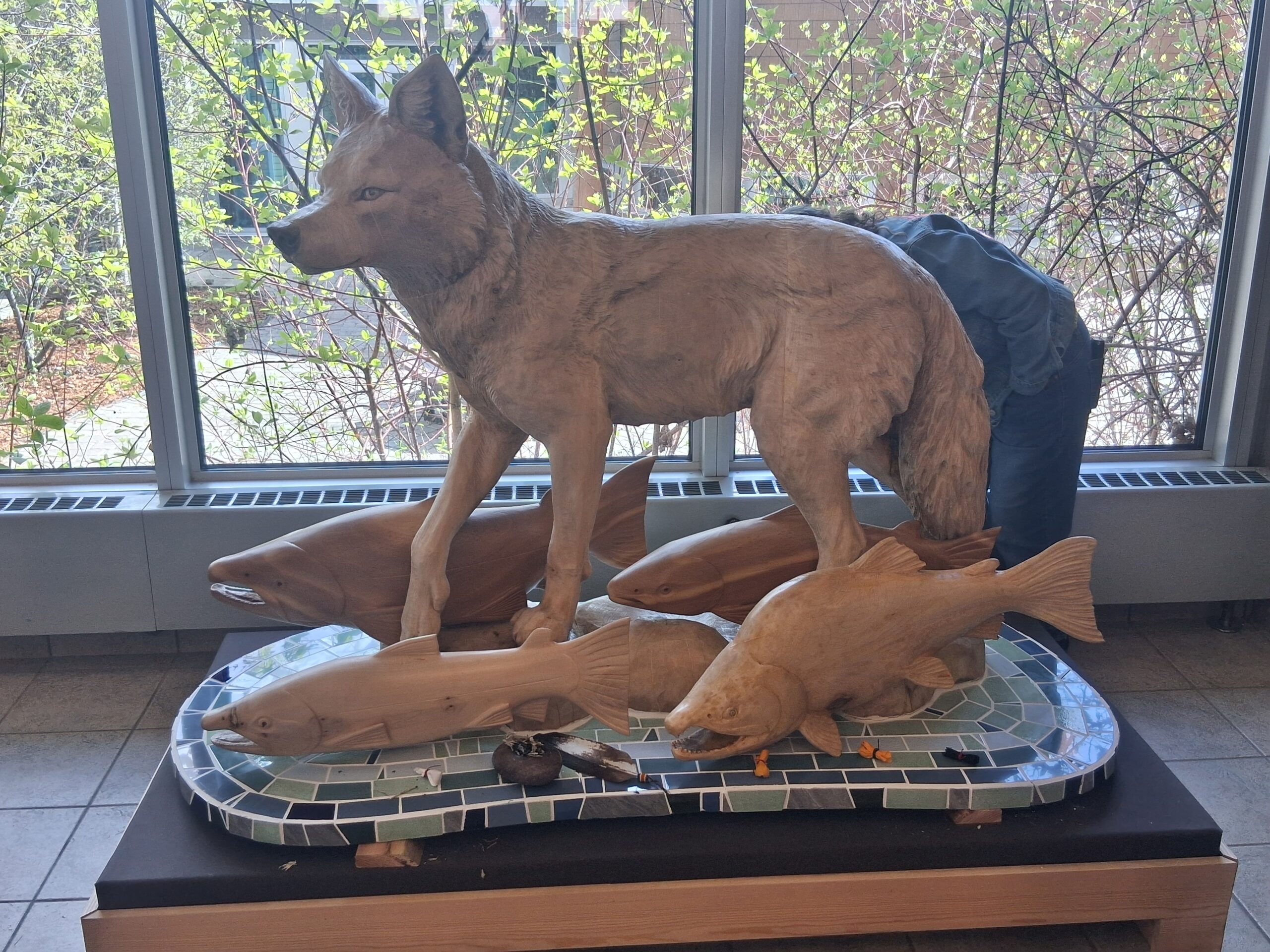
For the Sinixt, salmon were central to life, culture, ceremony, and trade. Kettle Falls was one of the great salmon gathering places of the Upper Columbia, where families and Nations gathered for generations to fish, trade, and celebrate the return of the salmon. The loss of these migrations following the construction of Grand Coulee Dam was not only an ecological loss, but a profound cultural one. (Wikipedia)
In both Sinixt and Syilx oral history, there is the story of Coyote bringing the salmon upstream.
 Sinixt teachings tell that Coyote brought the salmon up the Columbia River and into the Kootenay waterways each year. One version says that when Coyote reached the Sinixt people, he asked for a wife in exchange for the salmon. When the offer was refused, Coyote placed a barrier across the river, creating what is now known as Bonnington Falls and preventing salmon from reaching Kootenay Lake. (kootenay-lake.ca)
Among the Syilx (Okanagan), the captíkwł “How Coyote Brought the Salmon” tells of sənk̓lip (Coyote) promising the people: “Give me a wife, and I will give you salmon.” In this story, Coyote breaks the barrier that blocked the salmon trail and allows the fish to return upstream, restoring both food and balance to the people and the land. The Okanagan Nation Alliance continues to share this story as part of their salmon restoration work today. (Okanagan Nation Alliance)
To honour this shared history, the Salmo Watershed Streamkeepers 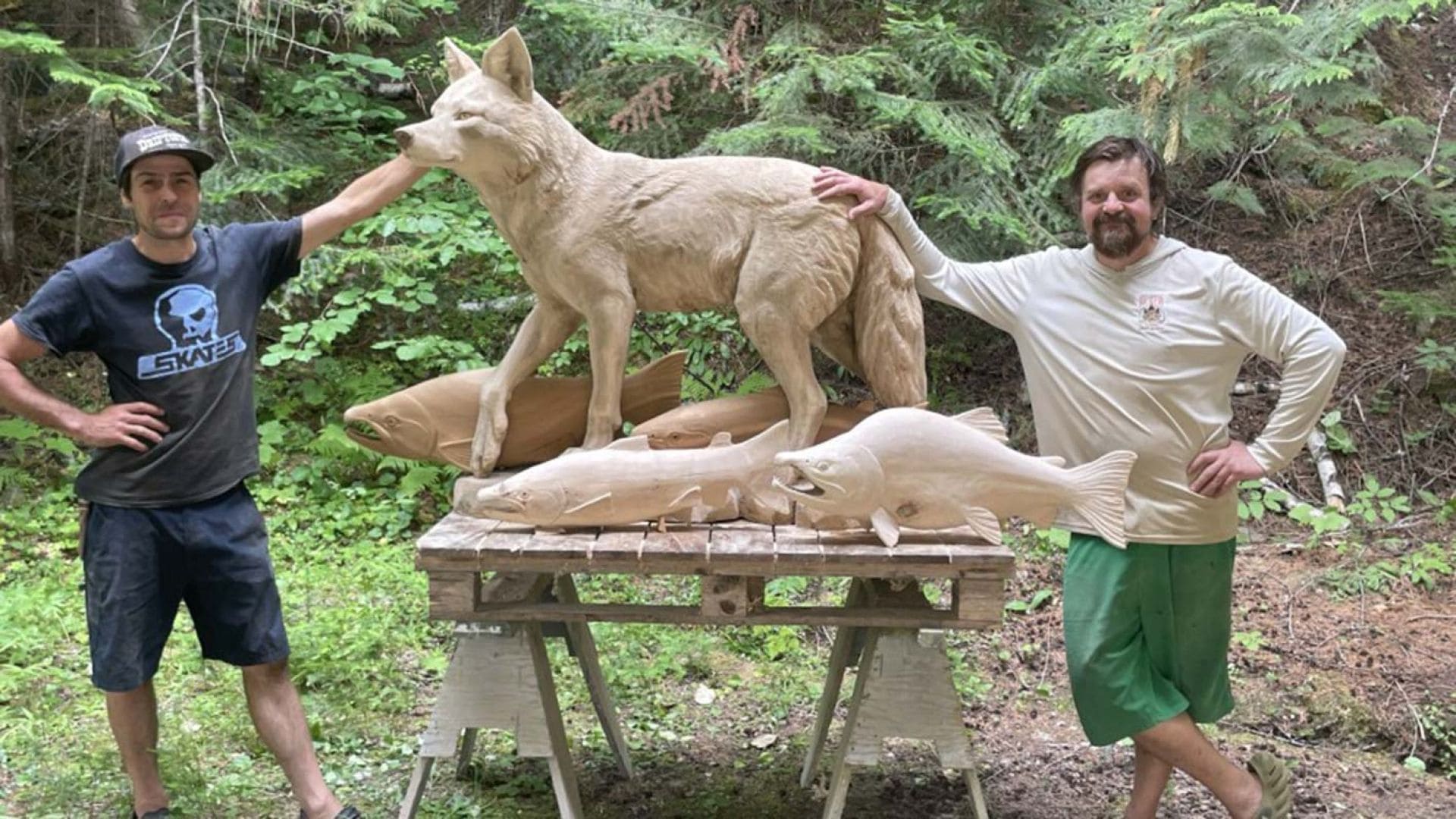 Society commissioned Coyote Bringing Us Salmon, a wooden sculpture created by artists Dmitri Klimenko and Chad Thompson. The carving features Coyote alongside the salmon species that once migrated up the Columbia to the Salmo River, representing both remembrance and reflection—recognizing what was lost while continuing the conversation around watershed restoration, salmon reintroduction, and the cultural importance of these fish to Indigenous communities throughout the region.
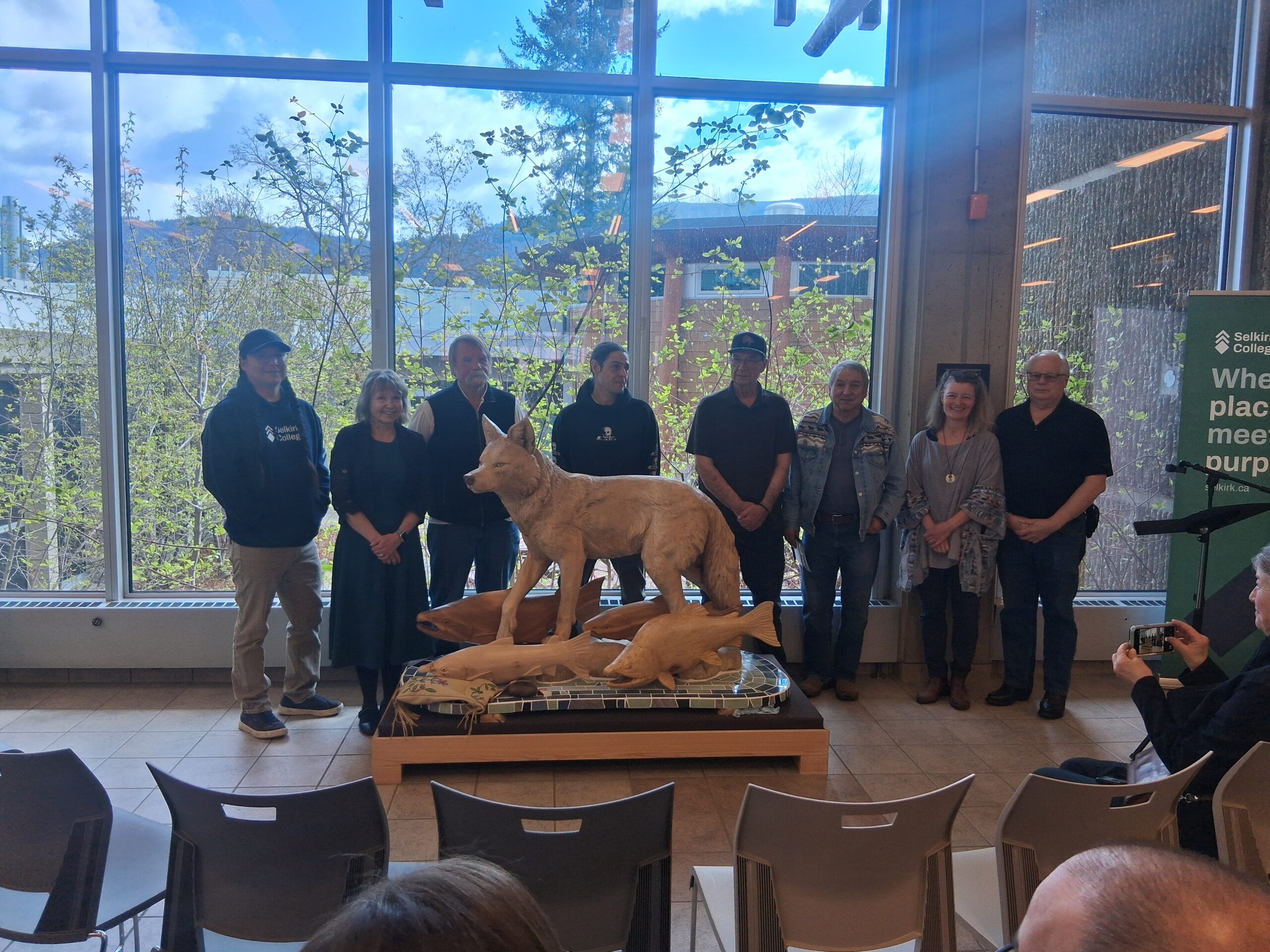
In April 2026, the sculpture was donated to Selkirk College and unveiled at the Castlegar Campus Commons, where it now stands as a reminder of the river’s history and the importance of protecting and restoring the watersheds we live in. The unveiling brought together members of the Indigenous, Selkirk College, and local communities, including Sinixt Elder Richard Desautel, Indigenous Elder D.R. Michel, Métis Elder Gerry Rempel, and representatives from the Salmo Watershed Streamkeepers Society and Selkirk College. (Selkirk College)
imaginesalmon.bc.ca.